
That Doesn’t Make You Special
Or does it? A few thoughts on destructive words

Years ago, in the early ’90s, I had what you might call a psychic break. I entered therapy (for what turned out to be four years), and after a treatment course of the first several months, a dear school colleague of mine looked at me one February day and said, “Oh, you’re back.” Mrs. Crim had noticed that the old Miss O’ had returned to form (beyond mere function), more or less, and I was both surprised and touched that she’d seen that, because it was true. Possibly that day, maybe another, at lunch, this change in me came up, and I said that I had been struggling with depression, something I hadn’t realized I had.
Another colleague, I’ll call her Ms. Bea, said, “That doesn’t make you special, Lisa.”
Sit with that, as if you were me, as long as you need. Or better, take your own most vulnerable confession, and put that response to it. Thoughts?
I don’t know what it is about me, but hers is not an uncommon response to things I admit to, or apologize for, or reveal. When people share discoveries about themselves, I think the last phrase I would use to a friend or even a stranger is, “That doesn’t make you special.” That same colleague, Ms. Bea up there, once said, as I explained my youngest brother’s leg amputation surgery that I was worrying about all day, a condition caused by deeply invasive fibroid tumors: “His tumors aren’t malignant, Lisa.” I could only explain, “The tumors aren’t cancerous, no, but they are life threatening, because they suffocate veins and arteries.” Also, he won’t have half a left leg, but what’s that, I guess.
It doesn’t make him special. Oh, wait—it does.
There is something about Miss O’, though, that does seem to attract the commentary of people who want to knock me down a peg. I find this odd, mostly because it’s not as if I have achieved even mild heights. This has been a problem my whole life, so I guess I come off as arrogant or something, when I share anything. For example when I published my little 2012 eBook, a practice project for my friend Magda, who’d recently learned to make eBooks, I asked while visiting a writer friend, “Did you see my Facebook post about my little book? Did you get to read any of it?” (Several pages are (still) free from the “Sample” feature on Amazon.) This friend crossed her arms and just looked at me. Now, she’s a published author, as in real publishing houses she’d had to submit to for publication, a veteran of signing actual book contracts, so I didn’t expect her to be, you know, deeply impressed by my self-publication endeavor, but maybe because I’d completed something that involved writing she’d be a little enthused; I never pretended it was more than it was. But I hadn’t expected the sneer.
“You have reviews, what do you need me for?” It didn’t make me special, okay. Got it.
I was hurt. And then later it hit me: I had reviews, a couple dozen of them, from supportive NYC playwright friends and former students and colleagues and other friends, which I thought was very kind, really swell of them. It’s the power of Facebook and asking for people to review it if they were so inclined—and I think most people knew that this exercise would be about it for me. I was not the level of writer who sends out work to publishers, and I kept a solid day job, hence the $2.99 price tag, the lowest Amazon and Barnes and Noble would let me charge.
So what was her reaction about? That I wasn’t trying hard enough to bother her, or that I shouldn’t try at all? That I hadn’t earned the right to any reviews let alone positive ones? I’ve been thinking about myself as a writer, especially since learning my teacher David Huddle died.
Lately I’ve found myself, as we do in winter—unless of course this does make me special—questioning my worth not only as writer, but really as a human being, as a friend, as a citizen. I’ve been running over things in my mind. Last year and still, I have lots of surprise jags of grieving for my mom—I know, I know, it doesn’t make me special—and so when I heard about the death of my friend and teacher David, I was perplexed as to why I was unable to grieve him.
A couple posts back I wrote an appreciation for David, and I wrote it without tears, because all these months, no tears wanted to come. I’d look at his books, his poems, nothing. The night after I published that post, just as I was trying to sleep, I remembered my writing portfolio, the one I turned in to David prior to my graduation from Bread Loaf in 1994:
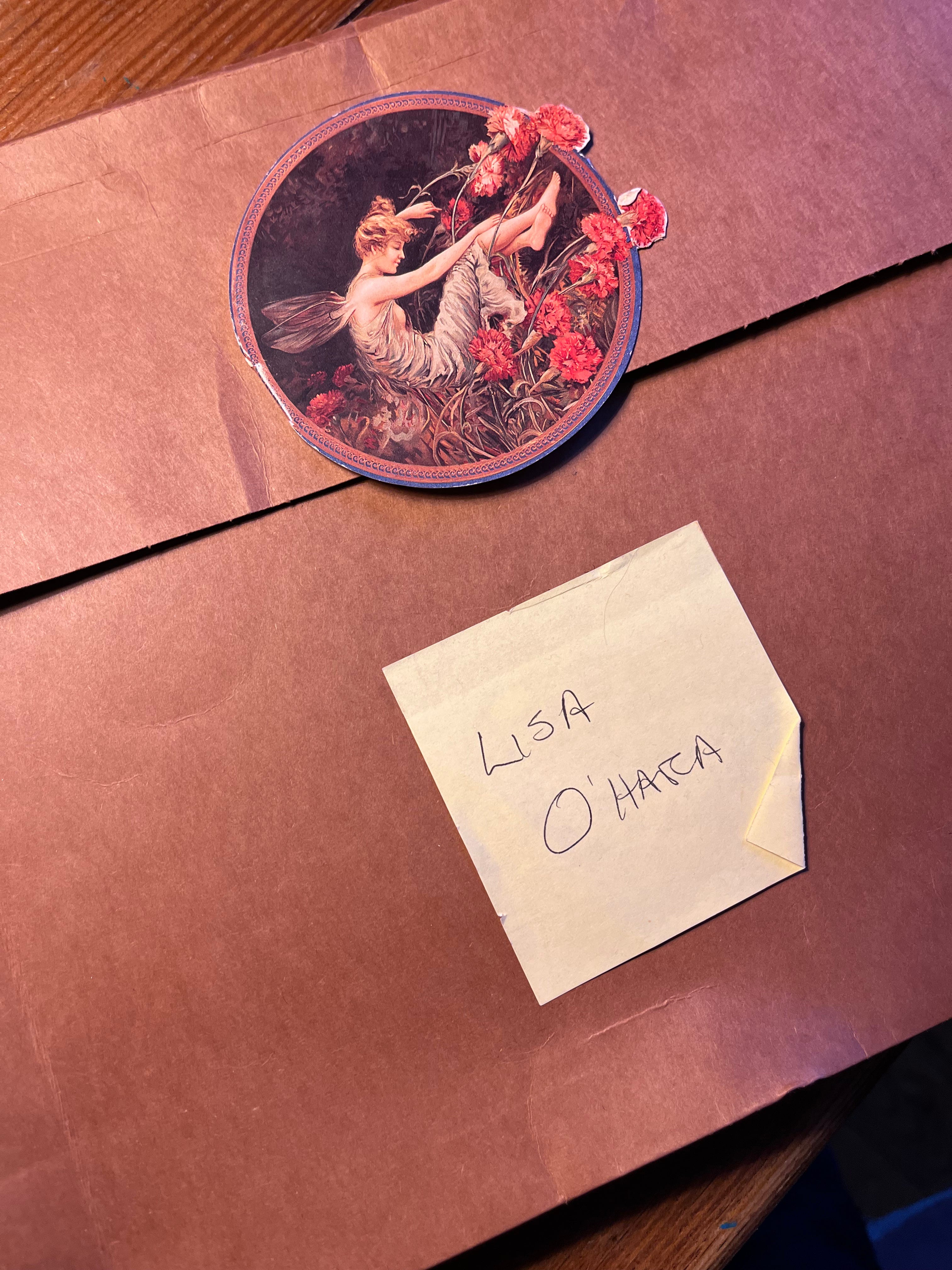
I’d looked at it again once before, in a cursory way, some nine or ten years ago now, when I did a staycation in my Queens apartment to conduct a massive spring cleaning. I purged most all my Bread Loaf stuff (my BL friend George advised, if you didn’t write it, toss it), and also assembled scrapbooks from my teaching life of items I wanted to hold onto, discarding the rest. I photographed postcards and notes people had sent over the years, and texted them to the senders along with my thanks, and discarded those, too—and that day of toss-texting was a joyful day of connecting.
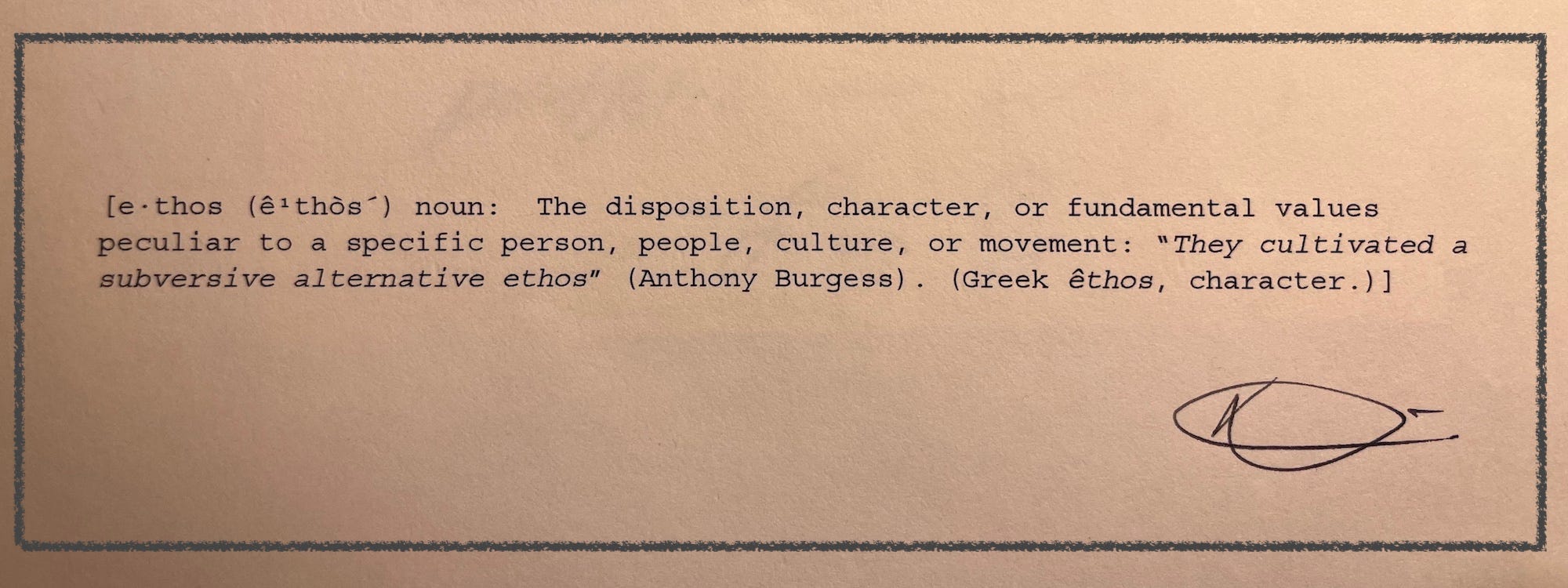
Where was that portfolio? I turned on the light, got out of bed, and padded to my office area, where I found it in a file box. I got back in bed and decided to really reread it—the stories and exercises I did, along with David’s letters of commentary. There were many things to appreciate about the way David Huddle taught writing, and perhaps my favorite was that his pen never touched your page—you owned that page. He wrote you a letter. If you misspelled or misused a word vital to your fiction, he’d create a graphic of the dictionary definition entry as part of the letter. I loved that. His approach, I would say, made him special indeed. And I’m going to offer here a few of the things David thought made me special in his workshop:
Lisa
wrote a strong first story and “set a high bar” for the workshop;
modeled and inspired class “citizenship” by generating a practice of “helping others” rather than “jockeying for position,” as is customary in workshops;
“worked like a maniac” to write and revise her stories.
In rereading my portfolio work—in some places I was astonished by how good it was, and in many other places I could now see (32 years on) the many ways it could be vastly improved—I felt grateful to have it. Autobiographical in nature, as was David’s approach, the stories I’d written were childhood memories, especially stories of my mom, that I would otherwise have totally forgotten. What a gift to have those memories back. (This is a reminder for all of us to write our lives.)
I tend to view myself, by the way, as one of the lesser Bread Loafers, in that I didn’t have the best educational grounding to pursue a master’s in English there (no Ivy League for me, and a BA in Theatre Arts), and not exactly a personality (David also admired how “quiet” I was in my leadership to make a friendly workshop), so that I wondered (given David’s assessment) if my memory of myself was a false one.
Herewith I share a discovery—sharing with an end to challenge you, my friends, to do this service for yourself: there is a little bit to make me fucking special. So, one example:
The second summer I was there, some Bread Loaf students, young women in particular (and maybe I told you this story, but I’m thinking about it less dismissively now), nearly none of whom I knew from class or otherwise, took to stopping me in the dining hall, at the library, or on the path to the Barn, and asking my advice on their paper ideas, suggestions for resources, or ideas for approaches. I had no idea why, but being a naturally present, improvisational person, I just went with it. Finally, when a woman actually came to my dorm room on the third floor of the Inn after lunch and said, “Hi, I heard you might know about…,” and as per usual, I said, “Oh, yes, that’s funny, I read an article…,” or something—I had to ask her why she came to me, as it was happening a lot. She suddenly looked sheepish. “We call you The Oracle,” she said. I must have looked blank. “When we get stuck,” she said, “we consult The Oracle. You always have an answer.” I was stupefied, but I guess although I was not the most intelligent nor the best read, what I did do, I gather, was retain and connect what I read, and it turned out to be useful.
The thing I was, I know from David, was helpful, a citizen of Bread Loaf. I noticed early on at Bread Loaf that people were rather competitive. I’m not like that because I know myself. As I know I’ve mentioned before, I know I’m a solid B. If you gave me a grade for most any paper, class, or even life, it would be a B. That’s not self-deprecation; I’m just here to learn. It’s such a relief to be comfortable in the self-knowledge of being a hard-working B in a world too full of D- people desperate for A’s and unwilling to do the work. (You know who I mean.)
One other memory, tied to the above: I’m glad to be a person that others know they can talk to; as “Judgy O’Judger” as I can seem, what I really do is evaluate, listen, and treat others’ views with respect, unless you really are an asshole. Then, look out.
Once—and I probably told you this story—walking across campus, a student from Alaska, a Yupik Indian, caught up with me. She said to me quietly, without preface, “This place is so strange. I keep hearing, this one’s so brilliant, that one’s so intelligent.” And here she paused in her steps and so did I. We looked at one another. She asked, “But can he bring fish back to the village?” I nodded, newly awakened. “Pauline, you said it. That’s the only question.” And we continued on our ways.
I am allowing myself to admit that I love that I am that person, the person to whom relative strangers feel they can ask their questions, or reveal their truths, and be acknowledged, helped, or heard in that moment.
What do you know and love about you, about what makes you special? It doesn’t have to be a laundry list—that’s what I’ve discovered too; one thing works. I’ve been thinking that in times like this, when all around us are loud, ugly, incessant voices telling us the decent that we are scum, and they have the right to destroy us, that you might need to find a way to reassure yourself. Listen to the good voices around you, Mr. Rogers’s helpers, and not the voices of the jealous, hateful, ignorant, immoral, or dismissive. It does make you special, that quality, whatever it is.
Those three observations from David, which for him came down to “ethos,” may get me through the rest of my life.
And by the way, after reading all that writing again, I found myself, finally, in full-on grief for my old friend, hugging David via portfolio to my heart. So grateful.
Sending love,
Miss O’
When I read what you write, your specialness jumps off the page. This from someone not as articulate or able to put into words how I feel. I read what you write and yes, that's it! Yes, that's it.